
Uncategorized
Oct 15, 2026
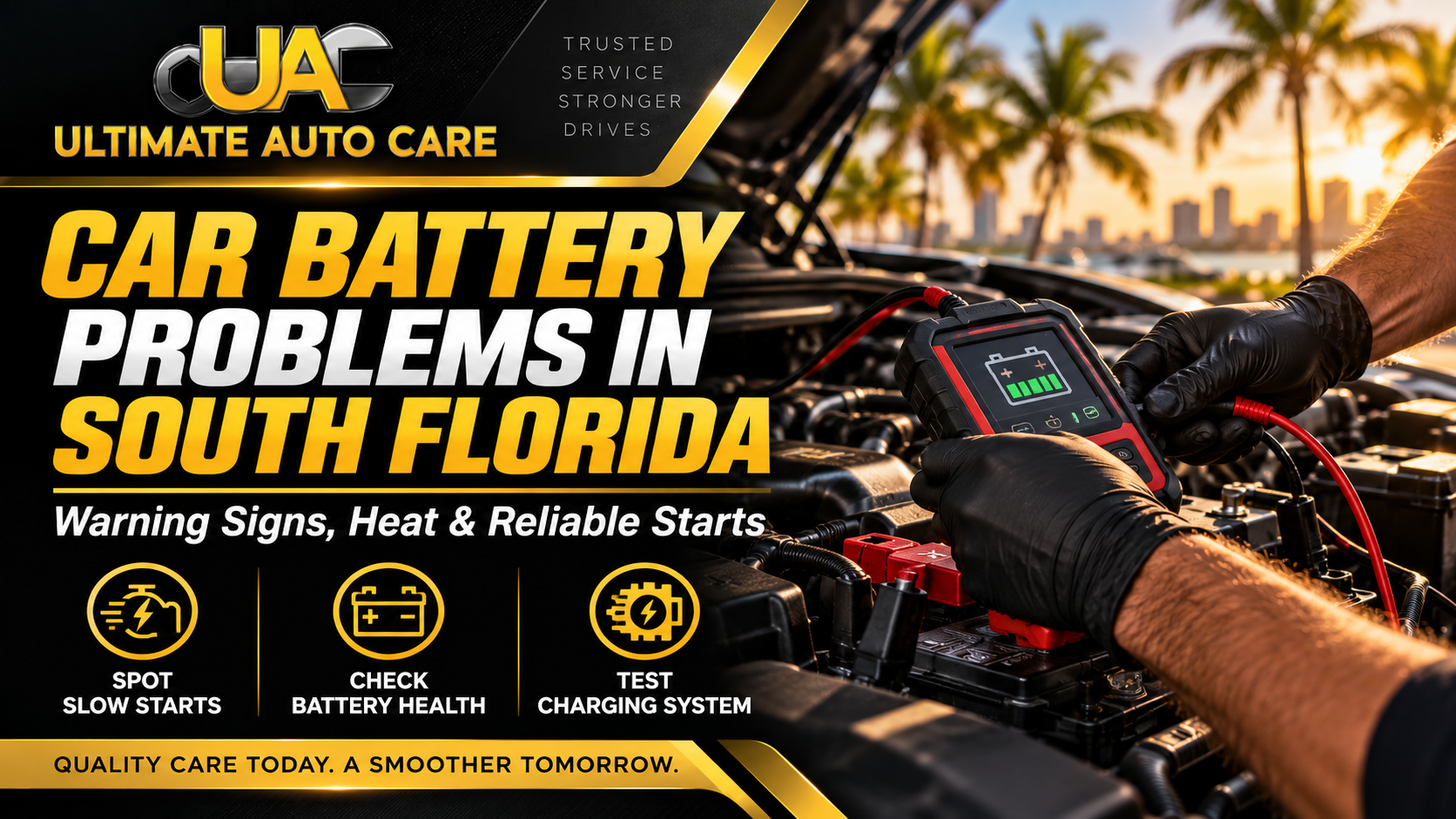
Car Battery Problems in South Florida: Warning Signs, Causes & Prevention
Car battery problems South Florida drivers experience can become more noticeable during periods of extreme heat. If your car is slow to start, the dashboard lights flicker, or you hear a clicking sound when turning the key, the battery or charging system may need attention.
Understanding the warning signs can help you address a small problem before it leaves you stranded in a parking lot, driveway, or roadside location.
How Does South Florida Heat Affect a Car Battery?
High temperatures can accelerate chemical reactions inside a car battery and contribute to internal wear and fluid loss in some battery designs. While cold weather is often associated with starting problems, hot climates can also shorten battery life.
Frequent short trips, heavy electrical demand, long periods without driving, and a charging-system problem can add to the strain. Heat does not automatically mean a battery will fail, but it makes regular checks worthwhile.
A professional inspection can help identify car battery problems South Florida drivers may encounter, including weak battery performance, charging-system faults, and loose electrical connections.
Common Car Battery Problems South Florida Drivers Should Know
1. Slow engine cranking
If the engine turns over more slowly than usual when you start the car, the battery may not be supplying enough power. A weak battery is one possible cause, although starter or wiring issues can produce similar symptoms.
2. Clicking when you turn the key
A rapid clicking sound can indicate insufficient power reaching the starter. A single click can also point to a starter or connection issue, so testing is better than guessing.
3. Dim headlights or flickering electronics
Headlights that dim unexpectedly, dashboard lights that flicker, or electronics that behave inconsistently may indicate a battery, alternator, or electrical connection problem.
4. Battery warning light
A battery-shaped warning light does not necessarily mean the battery itself is defective. It can signal a problem with the charging system, including the alternator, belt, wiring, or battery connections.
5. Corrosion or loose terminals
Visible corrosion around battery terminals or loose connections can interfere with electrical flow. Do not touch a damaged, leaking, swollen, or unusually hot battery; have a qualified technician inspect it.
6. Repeated jump-starts
A jump-start may get the vehicle running temporarily, but it does not fix the underlying problem. Repeated failures call for battery and charging-system testing.
How to Help Your Car Battery Last Longer
- Have the battery and charging system tested during routine maintenance.
- Keep battery terminals and connections in good condition.
- Avoid leaving lights, accessories, or electronics running when the engine is off.
- If you rarely drive, ask a technician whether your driving pattern calls for additional battery maintenance.
- Replace a battery when testing and its condition indicate that replacement is necessary, rather than relying on age alone.
Battery life varies with the battery type, vehicle, driving habits, heat exposure, and maintenance. There is no single replacement interval that fits every car.
Battery or Alternator: How Can You Tell the Difference?
The battery provides the power needed to start the engine and supports electrical systems when required. The alternator helps supply electrical power while the engine runs and recharges the battery.
Because their symptoms overlap, a professional test can check battery condition, charging output, connections, and related components. This helps avoid replacing a battery when the real problem lies elsewhere.
When Should You Schedule an Inspection?
Arrange an inspection if your vehicle repeatedly struggles to start, needs frequent jump-starts, displays a battery warning light, or has unexplained electrical problems. If the battery is swollen, leaking, or unusually hot, do not attempt to jump-start it; seek professional assistance.
For drivers in North Lauderdale and the surrounding South Florida area, Ultimate Auto Care can help assess vehicle concerns and identify the appropriate next step. Contact the shop to ask about battery and charging-system testing. If you notice recurring car battery problems South Florida weather may aggravate, arrange an inspection rather than relying on repeated jump-starts.
Don’t wait for a no-start morning. A timely inspection can help identify battery-related trouble before it becomes an unexpected interruption to your day.